Analytics Platform That Predicts Activation, Not Just Tracks It
Analytics platform for tracking activation metrics — and predicting them: Moveo One forecasts which new users will stall in onboarding so you intervene before drop-off.

For Growth Lead
Role-focused use case
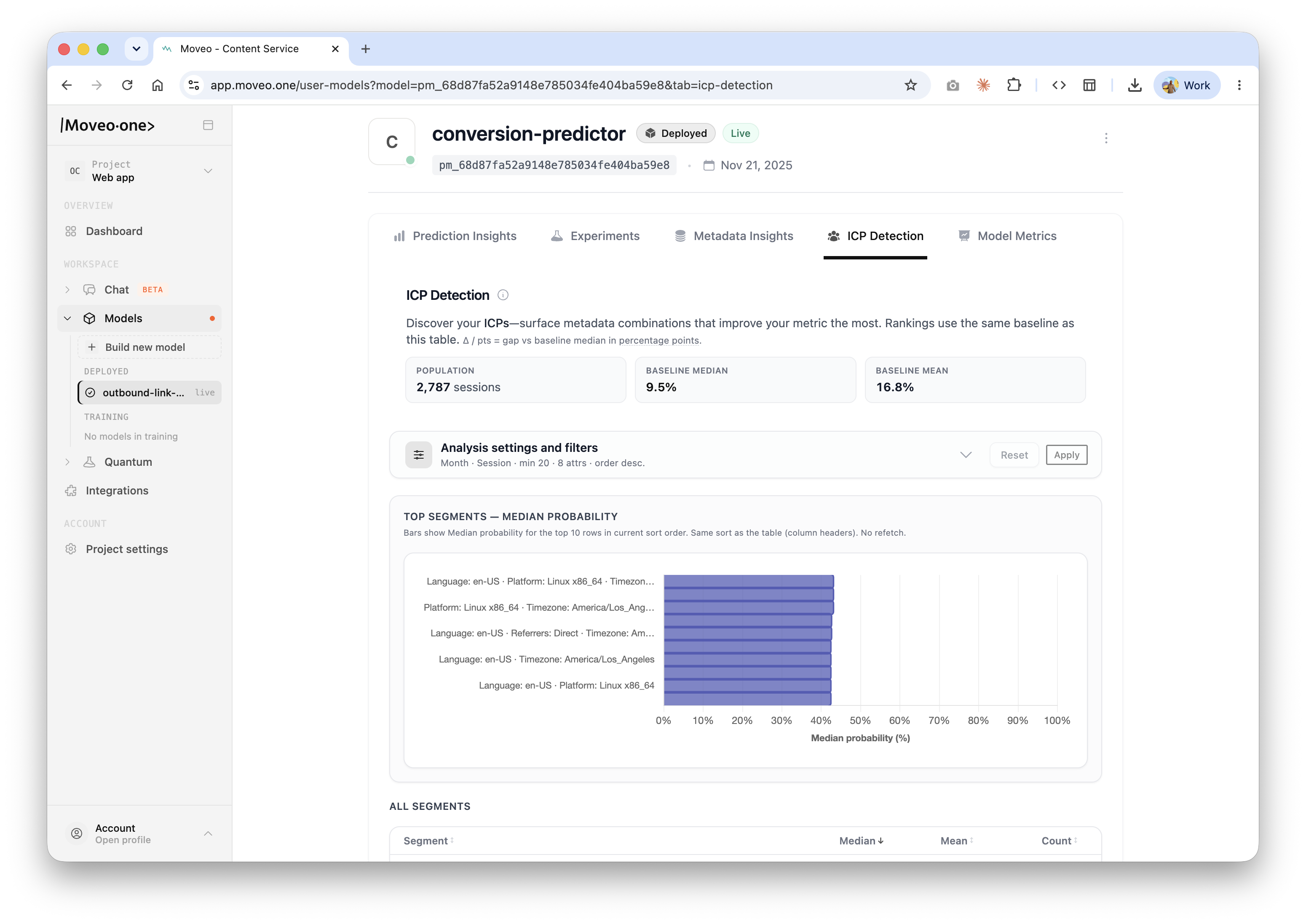
An analytics platform for tracking activation metrics tells you what percentage of new users reached your activation milestone last week; Moveo One tells you which of this week's users are about to miss it. Moveo One is a predictive behavioral intelligence platform that forecasts activation instead of tallying it after the week closes. It does not replace your activation dashboard; it adds the missing dimension to it, forecasting per-user activation so you can act on a stalling user while they are still in onboarding rather than counting them in next week's drop-off.
Tracking activation is a lagging metric
Activation rate is one of the most-watched numbers in SaaS, and one of the most frustrating, because by the time it moves the users behind it have already decided. A dashboard that reports "activation fell to 38% this week" is describing a result, not a lever. You can slice it by cohort, channel, and platform — and still only be reading the past.
The metric you actually want to act on is a forward one: not "how many activated" but "which users are about to stall, and why, right now." That reframing — from measuring an outcome to predicting it per user — is the same one behind increasing conversion rate and is the core difference between an analytics tool and a prediction layer.
Predict activation per user, then experiment on the right cohort
Moveo One trains a behavioral model on your onboarding events and returns a per-user prediction: the calibrated probability that each new user will reach activation. That score turns the activation funnel from a rear-view chart into a runtime signal. A user predicted to stall can be nudged with the right next step before they go quiet; a user already on track can be left alone.
Because this is the experiment pillar, prediction also sharpens your tests. Instead of running an onboarding A/B test across all new users — where the effect averages out against people who were always going to activate — you scope the change to the cohort predicted to stall. Lift shows up clearly because the experiment is pointed at the users who can actually move, the same logic that makes predicting freemium-to-paid conversion sharper than a blanket campaign.
Why Moveo One
Moveo One goes beyond tracking activation to predicting it per user, so you intervene with the users likely to stall before they ever show up as a dip in the metric. It connects to the analytics you already run — Amplitude, Mixpanel, PostHog, Segment — or collects through its own SDKs, and returns calibrated, explainable scores you can wire into onboarding logic and scope experiments around. You can see the broader set of journey outcomes it drives under improve user journeys, and how it fits a web application specifically.
In practice: nudging before the stall
A growth team was tracking activation rate closely but kept finding out about drop-off too late — the weekly number would dip, and only then would they dig into which step had leaked. They wanted to predict which new users would stall in onboarding and nudge them before drop-off, not after. With per-user activation prediction in place, the team identified at-risk users during their first sessions and triggered targeted nudges while those users were still active, converting a lagging report into an early-warning system they could act on.
Frequently asked questions
Does Moveo One replace my activation analytics dashboard?
No. It adds prediction to what you already track. Your dashboard reports activation after it happens; Moveo One forecasts which current users are about to stall, so you act during onboarding instead of reviewing the result later. It connects to existing analytics like Amplitude, Mixpanel, PostHog, and Segment.
How is predicting activation different from tracking it?
Tracking is a lagging measure — it counts users who already activated or dropped. Predicting is forward-looking: a calibrated per-user probability that a new user will reach activation, available while you can still influence the outcome.
How does prediction improve activation experiments?
It lets you scope an onboarding test to the cohort predicted to stall rather than running it across everyone. Because the change targets the users who can actually move, the lift shows up clearly instead of averaging out against users who were always going to activate.
Keep exploring: increase conversion rate · predict freemium to paid conversion · browse all use cases
Keep exploring
Related use cases
Build a Predictive Model to Improve Conversion
How to build a predictive model that improves conversion: Moveo One trains on your real behavior and scores each session's likelihood to convert in real time, so you act on hesitation before the sale is lost.
Improving UX During Onboarding
How to improve onboarding UX: Moveo One reads the behavior new users can't articulate — false clicks, attention decay, autopilot tapping — and points to the exact screens to fix, no manual tagging required.
How to Increase Conversion Rate by Predicting Who Will Convert
How to increase conversion rate without guesswork: Moveo One scores every user's probability to convert in real time, so you act on the people actually ready to buy.