AI Paywall Optimization: Match the Paywall to User Intent
AI paywall optimization predicts each user's intent at session start, so you serve a soft paywall to explorers and a hard paywall to high-intent users — not one rule for all.

For Growth Lead
Role-focused use case
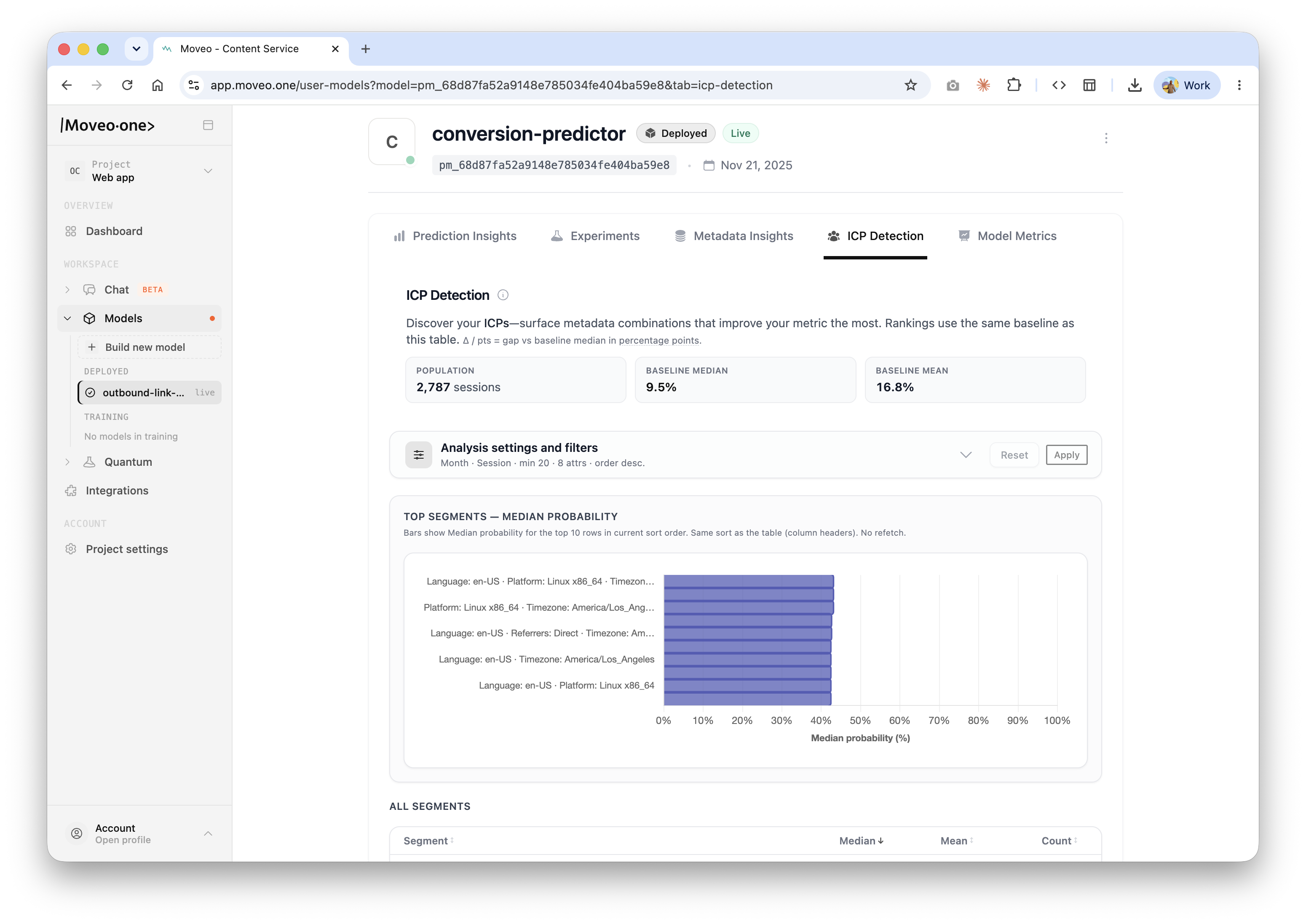
AI paywall optimization is the practice of choosing which paywall to show each user based on a prediction of their intent, rather than forcing the same wall on everyone. Moveo One is a predictive behavioral intelligence platform that reads buying intent in real time. It scores each user's likelihood to convert at session start and routes them accordingly: a soft, exploratory paywall for users still deciding, and a hard paywall for users already showing high intent. The result is a paywall that fits the person, not a single rule that compromises for both.
Why one paywall for everyone leaves money on the table
The recurring debate in growth teams — soft versus hard paywall — is usually framed as a single global choice. A hard paywall maximizes revenue from people who were always going to pay but blocks and frustrates the explorers who needed more time, suppressing signups. A soft paywall keeps the funnel wide and friendly but lets high-intent users slip past the moment they were most willing to commit. Picking one is picking which segment to underserve.
The question "how to choose between soft and hard paywall" only has a clean answer when you stop choosing for the whole population and start choosing per user. If you knew, at the start of a session, who is an explorer and who is ready to buy, you would not pick one wall — you would serve both, to the right people. That is the entire premise of soft vs hard paywall optimization done with prediction instead of opinion.
How prediction routes each user to the right paywall
Moveo One trains a model on your real product behavior and returns a calibrated probability of conversion for each user as their session begins. That score becomes a routing decision: low-to-moderate intent users meet a soft paywall that keeps them exploring and accumulating the behavior that later signals readiness; high-intent users meet a hard paywall at the moment they are most likely to convert. Because the score is calibrated, the threshold you route on is a real dial — set it where the revenue and signup trade-off lands best for your product.
This belongs to the Experiment pillar: instead of running a blunt A/B test that pits one global paywall against another and averages the lift away, you scope the treatment to the users predicted to respond. The high-intent cohort sees the change meant for them, so the lift shows up clearly instead of being diluted by users who were never affected. The mechanics overlap directly with how to run targeted A/B tests.
Why Moveo One
Moveo One predicts each user's intent at session start and serves the information to route them to the right paywall — soft for explorers, hard for high-intent — instead of forcing one paywall on everyone. The prediction is grounded in real behavior and arrives fast enough to act on in the first moments of a session, which is exactly when the paywall decision is made. It connects to the same broader goal of increasing conversion and pairs naturally with predicting who will convert, so the paywall is one expression of a single intent signal you can reuse across the product.
In practice: +27% revenue per signup
A B2C ed-tech company was stuck on the soft-versus-hard paywall question, with each side of the team holding a defensible position and neither able to prove it. Rather than commit to one wall globally, they used Moveo One to predict intent at session start and routed each user accordingly — explorers into a softer experience, high-intent users into a direct paywall. The outcome was a +27% lift in revenue per signup, achieved not by raising the wall for everyone but by matching the wall to the person. The same approach extends to mobile, where you can apply it to increase app conversion rate.
Frequently asked questions
What is AI paywall optimization?
It is choosing which paywall to present to each user based on a prediction of their intent, instead of applying one global paywall. A model scores conversion likelihood at session start, and users are routed to a soft or hard paywall depending on how ready they are to pay.
Should I use a soft or hard paywall?
Both, targeted by intent. A hard paywall captures the most revenue from high-intent users but suppresses exploration; a soft paywall keeps the funnel open but lets ready buyers drift. Predicting intent per user lets you serve the soft wall to explorers and the hard wall to high-intent users instead of compromising on one.
How does Moveo One know a user's intent at session start?
It trains on your real product behavior and returns a calibrated conversion probability that updates as the session begins. That early score is enough to route the paywall before the user has invested much time, which is when the decision matters most.
Is this just an A/B test of two paywalls?
No. A standard A/B test compares two global paywalls and averages the result across all users. AI paywall optimization scopes each paywall to the users predicted to respond to it, so the lift surfaces clearly rather than being diluted across the whole population.
Keep exploring: how to increase conversion rate · how to run targeted ab tests · browse all use cases
Keep exploring
Related use cases
Build a Predictive Model to Improve Conversion
How to build a predictive model that improves conversion: Moveo One trains on your real behavior and scores each session's likelihood to convert in real time, so you act on hesitation before the sale is lost.
How to Increase Conversion Rate by Predicting Who Will Convert
How to increase conversion rate without guesswork: Moveo One scores every user's probability to convert in real time, so you act on the people actually ready to buy.
How to Increase App Conversion Rate with Targeted In-App Prompts
How to increase app conversion rate: Moveo One predicts which mobile users will upgrade and scopes in-app prompts to that cohort, so you see real lift instead of fatigue.