How to Reduce Onboarding Drop-Off by Predicting Who Will Quit
How to reduce onboarding drop-off: Moveo One predicts likelihood-to-abandon mid-flow and surfaces the friction point, so you intervene during onboarding instead of after users leave.

For Product Designer
Role-focused use case
How it works
- 1Connect onboarding events
- 2Predict likelihood-to-abandon mid-flow
- 3Intervene with at-risk users
- 4Measure completion lift
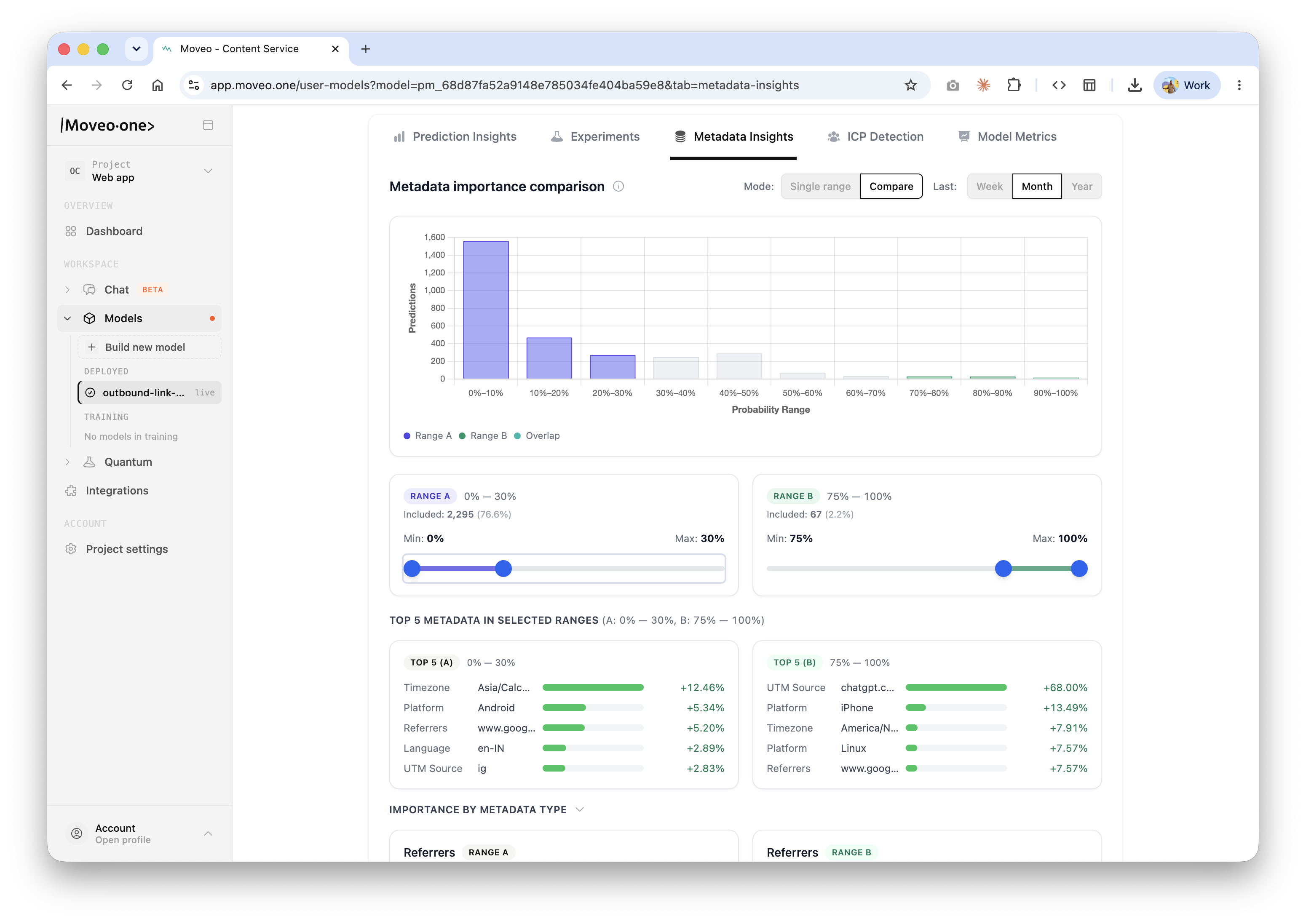
The most effective way to reduce onboarding drop-off is to predict who is about to quit while they are still in the flow, then intervene before they leave — not analyze the funnel after they're gone. Moveo One is a predictive behavioral intelligence platform that catches the drop while the user is still in the flow. It scores each user's likelihood-to-abandon mid-onboarding and surfaces the exact friction point driving it, so you act during the session that's slipping rather than reading about it in next week's retention report.
Why most onboarding fixes arrive too late
A typical onboarding analysis is a post-mortem. You export the funnel, see that 40% dropped between step two and step three, redesign step three, and wait a release cycle to find out if it helped. The people who churned in the meantime are unrecoverable, and the redesign was a guess about why they left — maybe the copy, maybe the permission ask, maybe a segment that never had intent in the first place.
The reason this loop is slow is that it treats drop-off as a symptom to count rather than a cause to find. The question "why users churn after onboarding" doesn't get answered by the aggregate funnel; it gets answered by knowing which attributes and behaviors precede the abandonment, per user, while it's happening. That is the difference between a chart that describes the leak and a signal you can act on before it widens.
Predict likelihood-to-abandon, then explain it
Moveo One connects your onboarding events and trains a behavioral model on how real users move through them. From that it returns a per-user likelihood-to-abandon score that updates mid-flow, so you can flag a hesitating user before they bounce. Crucially — and this is the Explain pillar — each score comes with the reason behind it: which step, which attribute, which behavioral pattern is dragging the user toward the exit. Knowing how to predict onboarding drop-off is only half the value; knowing why a specific cohort stalls at a specific step is what makes the fix precise.
With the score live, intervention becomes targeted: a contextual tip for the user stuck on setup, a simplified path for the segment that always quits at the integration step, a human nudge for the high-value account going quiet. You treat the at-risk users, not the whole base. The same cause-finding approach carries into deeper retention work in how to find why users churn, and for regulated, high-friction flows there's how to reduce customer onboarding drop-off in banking.
Why Moveo One
Moveo One predicts likelihood-to-abandon mid-onboarding and surfaces the friction point, so you intervene during the flow instead of after users already left. That timing is the entire advantage — a prediction you can act on inside the session beats a report you read after the cohort is lost. Because the score is calibrated and arrives with its behavioral reason, the intervention targets cause rather than a hunch, which is what improves user journeys and reduces churn at the same time. It adapts to a native mobile app, a cross-platform app, freemium SaaS, or an e-commerce setup flow alike.
In practice: +61% opening rate
A gaming platform with 200K users was losing people across its onboarding steps — a steady leak with no obvious single cause. Instead of redesigning blind, the team used Moveo One to predict likelihood-to-abandon mid-flow and act early on the users the model flagged. By intervening during the sessions that were slipping rather than after, they lifted their opening rate by +61%. The same onboarding, with prediction pointed at the right users at the right moment, kept people who would otherwise have quietly dropped.
Frequently asked questions
How do you predict onboarding drop-off before it happens?
Connect your onboarding events and train a behavioral model on how real users move through the flow. Moveo One then returns a per-user likelihood-to-abandon score that updates mid-onboarding, so you can flag a user who is about to quit while they are still in the session, rather than discovering the loss in an after-the-fact funnel report.
Why do users churn right after onboarding?
Usually because a specific step or attribute creates friction for a specific segment — a confusing permission ask, an integration that stalls, or low intent that was never going to convert. Aggregate funnels only show that drop happened; Moveo One surfaces the behavioral reason behind each at-risk user's score, so you fix the actual cause instead of guessing.
What can I do once a user is flagged as likely to abandon?
Intervene during the flow: a contextual tip for someone stuck on setup, a simplified path for a segment that consistently quits at one step, or a human nudge for a high-value account going quiet. Because the score updates live, the action lands while the user is still present, then you measure completion lift on the treated cohort.
In a regulated vertical? Banking onboarding adds KYC, identity verification, and document-upload steps — see how to reduce customer onboarding drop-off in banking.
Keep exploring: how to increase conversion rate · how to increase app conversion rate · browse all use cases
Keep exploring
Related use cases
Improving UX During Onboarding
How to improve onboarding UX: Moveo One reads the behavior new users can't articulate — false clicks, attention decay, autopilot tapping — and points to the exact screens to fix, no manual tagging required.
Customer Churn Prediction: Score Every User Before They Leave
Customer churn prediction done right: Moveo One scores every user's calibrated probability to churn — plus the reason why — so you intervene before they leave.
Top Predictive Analytics Platform for SaaS Churn Forecasting
Choosing a predictive analytics platform for SaaS churn forecasting? Moveo One scores every user's churn probability live and fires retention action in your product, not a weekly report.