Synthetic Monitoring vs Real User Monitoring: Where Moveo Fits
Synthetic monitoring vs real user monitoring explained: one watches uptime, the other watches sessions. Moveo's calibrated synthetic users predict behavior, a different question entirely.

For Developer
Role-focused use case
How it works
- 1Train behavioral models on real users
- 2Calibrate synthetic cohorts to match them
- 3Run them through a new flow
- 4Read predicted drop-off before launch
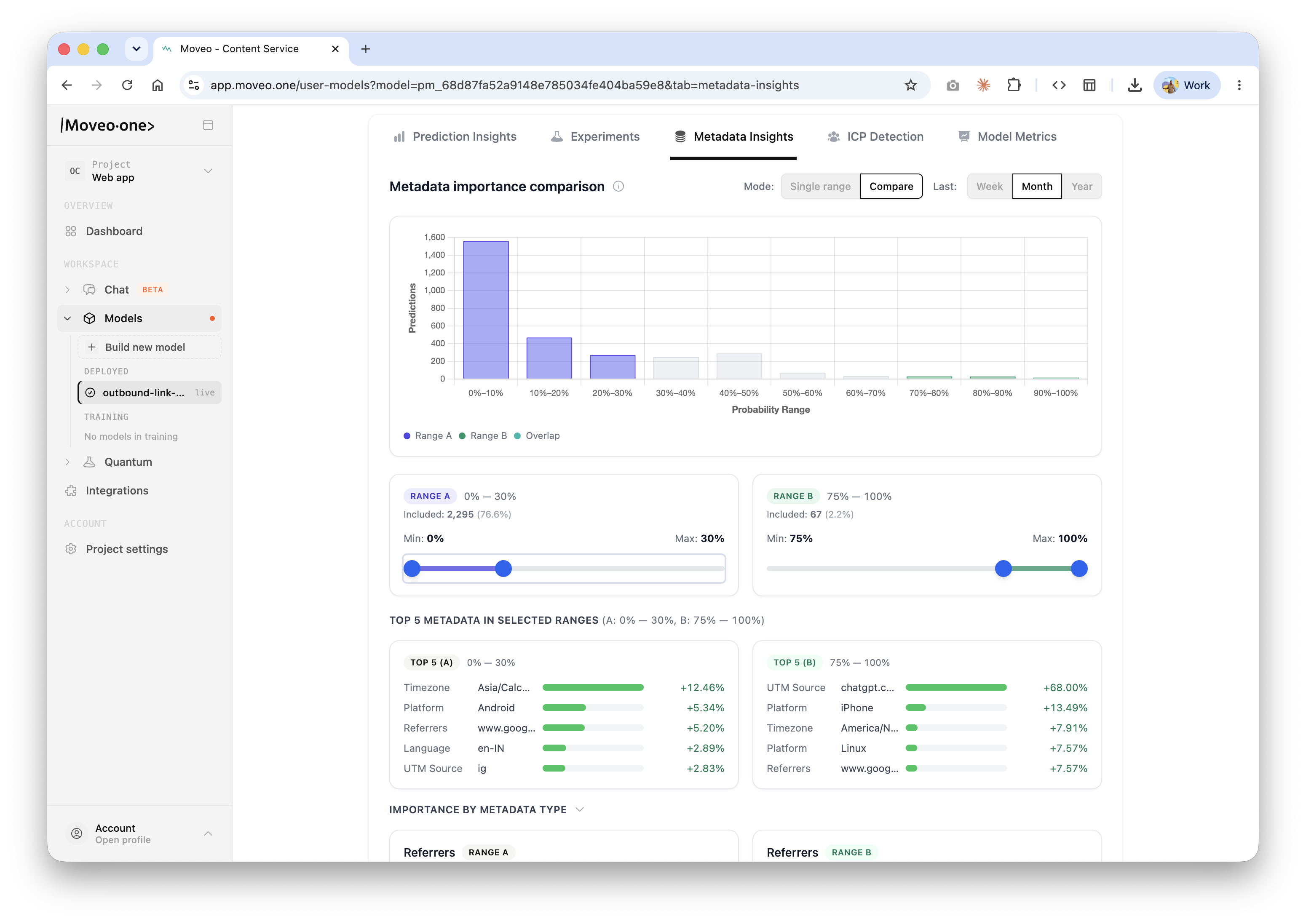
Synthetic monitoring and real user monitoring both watch whether your application is healthy — synthetic monitoring runs scripted probes against your endpoints on a schedule, while real user monitoring (RUM) measures load times and errors from actual live sessions. Neither tells you how a real person will behave in a flow you haven't shipped yet. That behavioral question is what Moveo One answers. Moveo One is a predictive behavioral intelligence platform for the flow you haven't shipped yet — and its synthetic users are calibrated to your real behavioral cohorts to predict where people will hesitate, drop, or convert.
Synthetic monitoring vs real user monitoring, briefly
The two sit on the same axis — system health — at opposite ends of "real." Synthetic monitoring is proactive and artificial: a bot hits your checkout every minute from several regions so you catch an outage before customers do. Real user monitoring is reactive and authentic: it instruments live traffic and reports the latency, JavaScript errors, and Core Web Vitals your actual users experienced. Most teams run both. Synthetic gives you a controlled heartbeat and coverage of paths with low traffic; RUM gives you ground truth on what real people endured.
But notice what both measure: did the page load, did the request succeed, how fast. That is server and front-end health, not human intent. When a search for "synthetic vs real user monitoring" is really a search for "will users get through my new onboarding," neither tool can answer — there is no behavior to monitor until you ship, and by then it's too late to model.
Where synthetic user journey monitoring stops and prediction begins
The phrase "synthetic user monitoring" gets stretched across two different jobs. In the ops sense, a synthetic user is a script that pretends to click through a journey to verify it's up. In the behavioral sense, a synthetic user is a model of how a real cohort decides. The first checks that the button works. The second predicts whether people will press it.
Moveo One does the second. It trains a behavioral model on your real product events, calibrates synthetic cohorts to match the way your actual segments move, and runs those cohorts through a flow that doesn't exist in production yet. The output isn't a green checkmark — it's predicted drop-off at each step, so you can see the friction before a single real user meets it. This is the Explain pillar: not "is the journey alive?" but "why will this segment abandon it, and where?" For the runtime side of the same engine, see how to code user prediction.
Why Moveo One sits beside, not against, your monitors
These are different things, and the honest answer is that Moveo One does not replace your uptime tooling — it fills the gap your monitors structurally can't. Synthetic monitoring watches whether the flow responds; Moveo's synthetic users predict how real cohorts will behave inside it. Keep Datadog or your RUM provider for health; reach for Moveo One when the question is behavioral and the flow is still on the drawing board. That makes it a natural fit for data monitoring teams who already own the health signal and now want the behavioral one, and it saves time on analytics by answering "will this work?" before the build, not after the rollback. The same forward-modeling approach scales up in how to simulate a ton of users in an iOS app.
In practice: the search was for behavior, not server health
A team typing "synthetic monitoring vs RUM" into a search bar didn't actually have an uptime problem — their monitors were green. What they needed was to predict user behavior through a redesigned flow, and no probe or session recorder could give them that. Moveo One's calibrated synthetic users answered the behavioral question directly: which cohorts would stall, and at which step, before the redesign went live. The monitoring stack stayed exactly as it was; the missing layer was prediction, not another health check.
Frequently asked questions
What is the difference between synthetic monitoring and real user monitoring?
Synthetic monitoring runs scripted, automated probes against your application on a schedule to catch outages and performance regressions proactively, even on low-traffic paths. Real user monitoring instruments live sessions and reports the actual load times, errors, and Web Vitals your real users experienced. Synthetic is controlled and artificial; RUM is reactive and authentic. Both measure system health, not user behavior.
Is Moveo One a synthetic monitoring tool?
No. Moveo One is a predictive behavioral intelligence platform. Its synthetic users are calibrated to your real behavioral cohorts to predict how people will move through a flow before you ship it, surfacing predicted drop-off. It complements uptime monitoring rather than replacing it, because it answers a behavioral question that health monitors cannot.
Can synthetic user monitoring predict behavior before launch?
In the operations sense, no — a synthetic monitor only verifies that an existing journey responds. In Moveo One's sense, yes: it runs cohorts calibrated to your real users through a flow that isn't live yet and predicts where they will hesitate or abandon, so you can fix friction before launch instead of after.
Keep exploring: predictive analytics tools · how to simulate 1m concurrent users · browse all use cases
Keep exploring
Related use cases
Same Analytics Everywhere — Derive Consistent Conclusions Across All Platforms
How to get consistent analytics across platforms: Moveo One unifies iOS, Android, and web behavior into one model-level layer, so Flutter, React Native, and MAUI apps produce comparable conclusions instead of drifting dashboards.
Agentic AI Software Testing With Behavior-Calibrated Users
Agentic AI software testing predicts where real users would stall before launch. Moveo One runs behavior-calibrated synthetic users through your flow, not just code checks.
How to Code User Prediction Without Building an ML Pipeline
How to code user prediction: Moveo One trains a behavioral model on your real events and returns per-user predictions over an API, so you ship intent scores without an ML stack.