How it helps
Run Targeted Experiments
Scope A/B tests to the exact users predicted to respond. Stop diluting results across cohorts that were never going to move.
Use cases
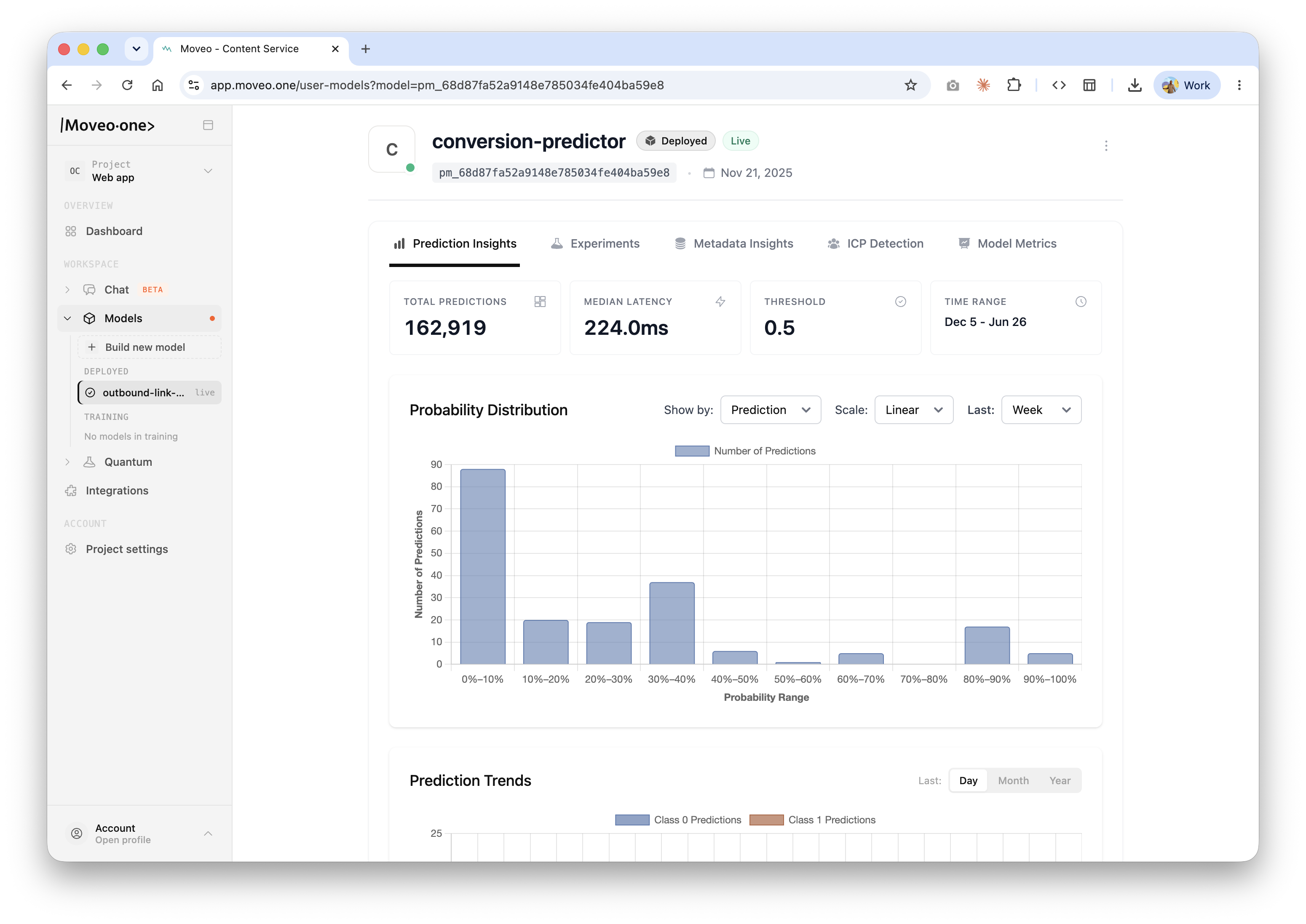
How to Increase Conversion Rate by Predicting Who Will Convert
How to increase conversion rate without guesswork: Moveo One scores every user's probability to convert in real time, so you act on the people actually ready to buy.
Jun 23, 2026
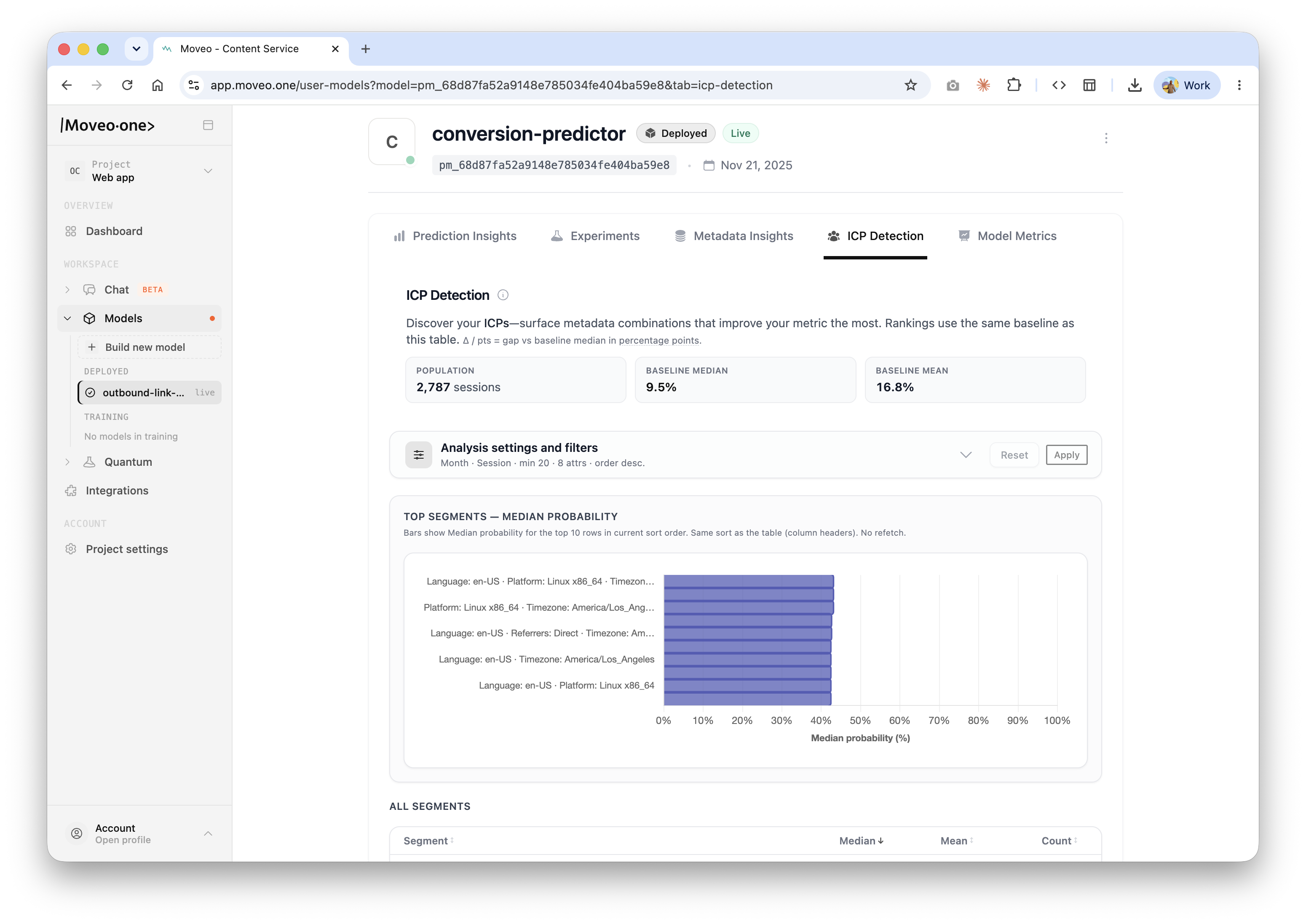
AI Paywall Optimization: Match the Paywall to User Intent
AI paywall optimization predicts each user's intent at session start, so you serve a soft paywall to explorers and a hard paywall to high-intent users — not one rule for all.
Jun 21, 2026
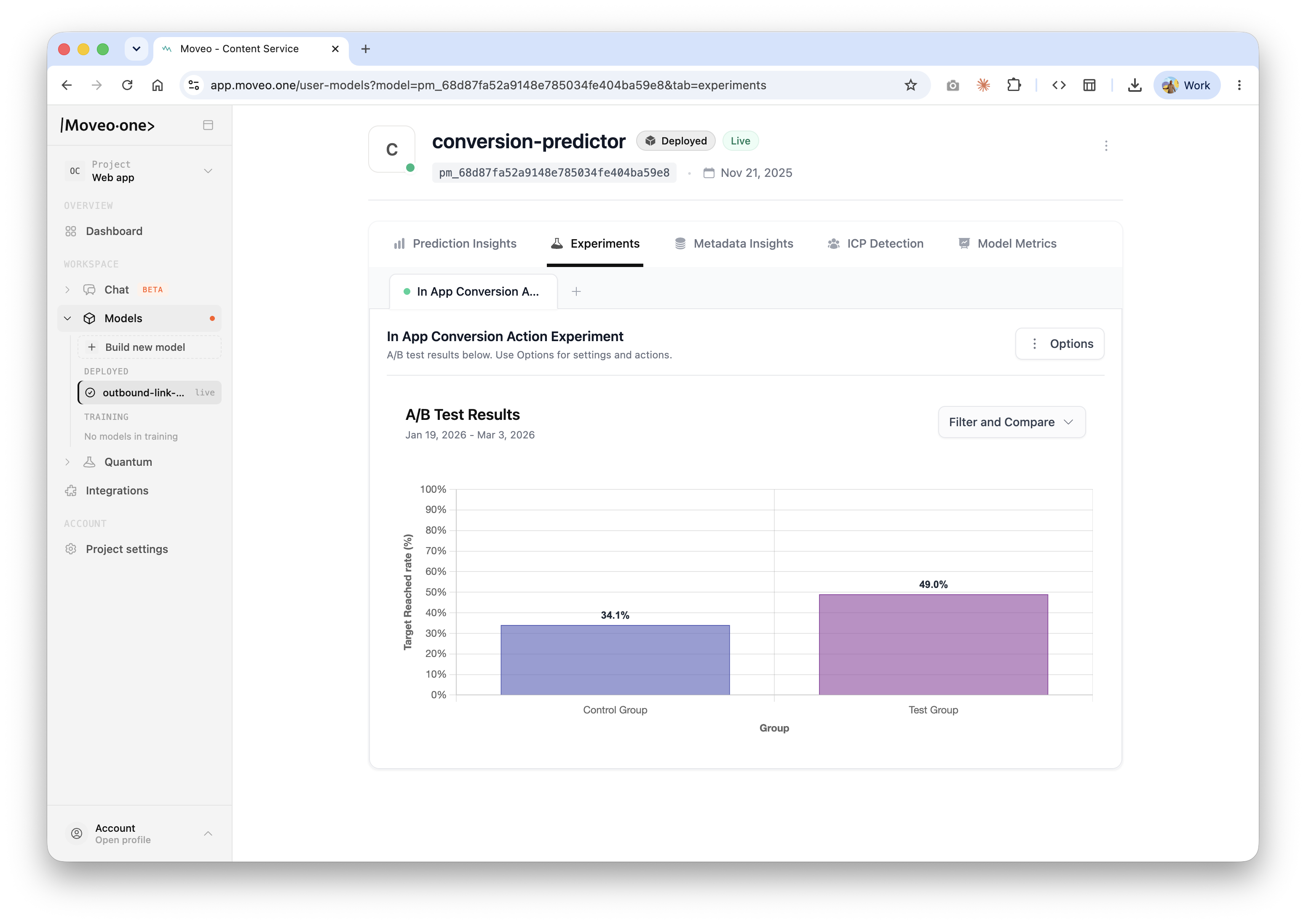
How to Increase App Conversion Rate with Targeted In-App Prompts
How to increase app conversion rate: Moveo One predicts which mobile users will upgrade and scopes in-app prompts to that cohort, so you see real lift instead of fatigue.
Jun 19, 2026
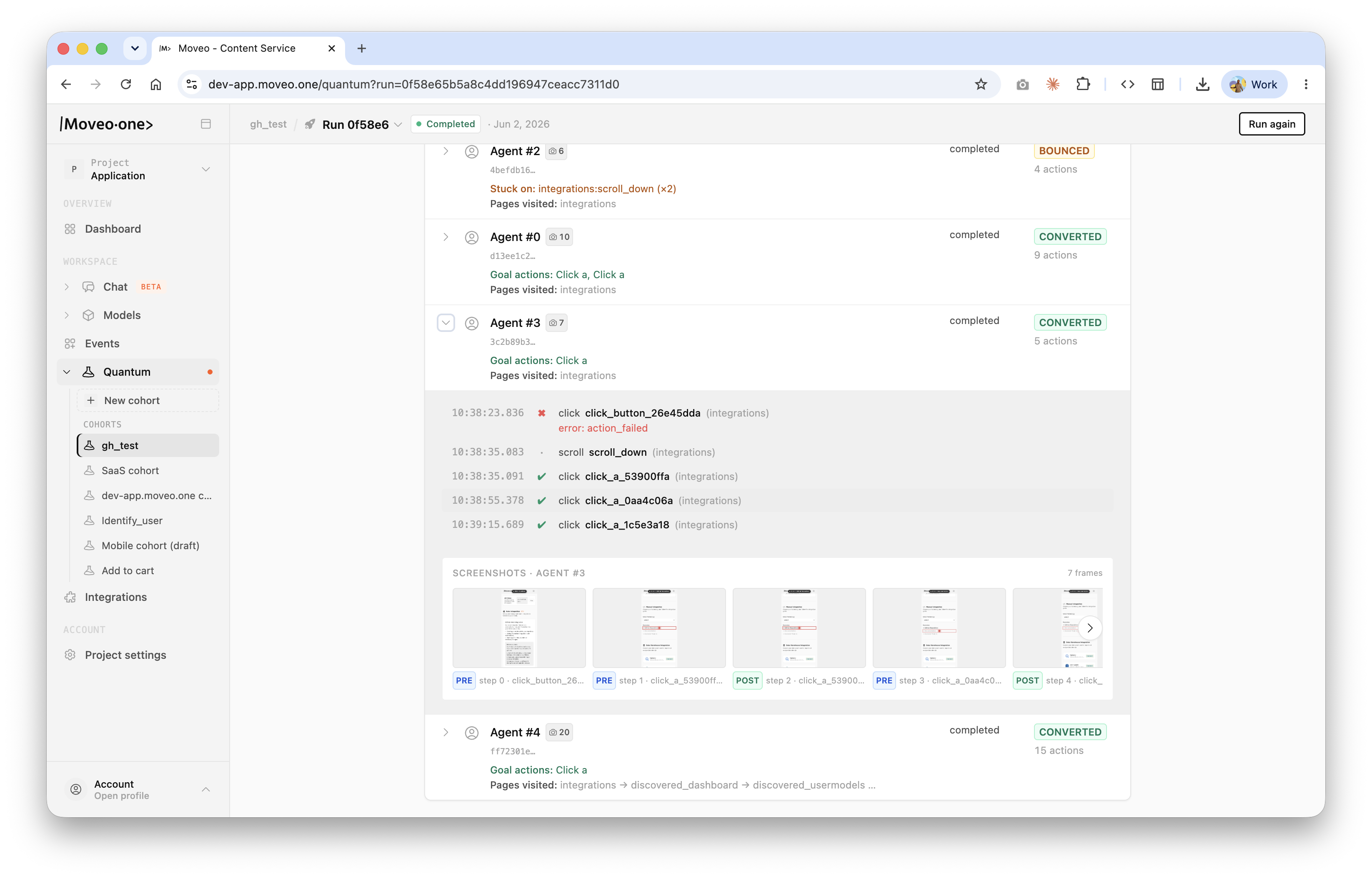
Agentic AI Software Testing With Behavior-Calibrated Users
Agentic AI software testing predicts where real users would stall before launch. Moveo One runs behavior-calibrated synthetic users through your flow, not just code checks.
Jun 17, 2026
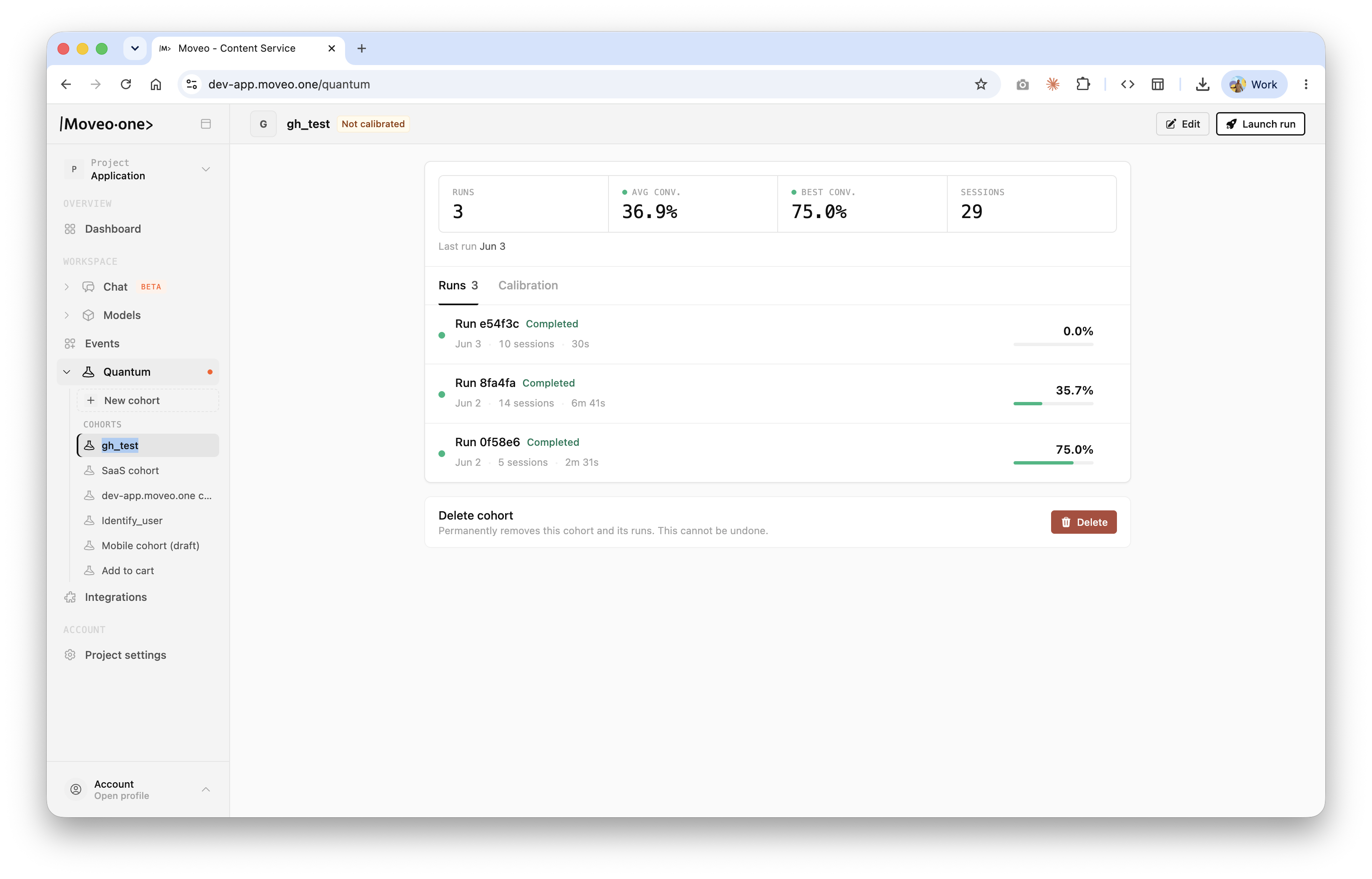
Synthetic Users: Calibrated Behavioral Testing Before You Ship
Synthetic users in Moveo One are calibrated to your real behavioral cohorts — not prompt-generated personas — so you can test changes against users that behave like yours.
Jun 7, 2026
Best Integrations for Edtech Conversion Rate Optimization
The best integrations for edtech conversion rate optimization connect to the analytics you already run and act on predicted intent. Moveo One turns that data into per-user conversion.
May 20, 2026
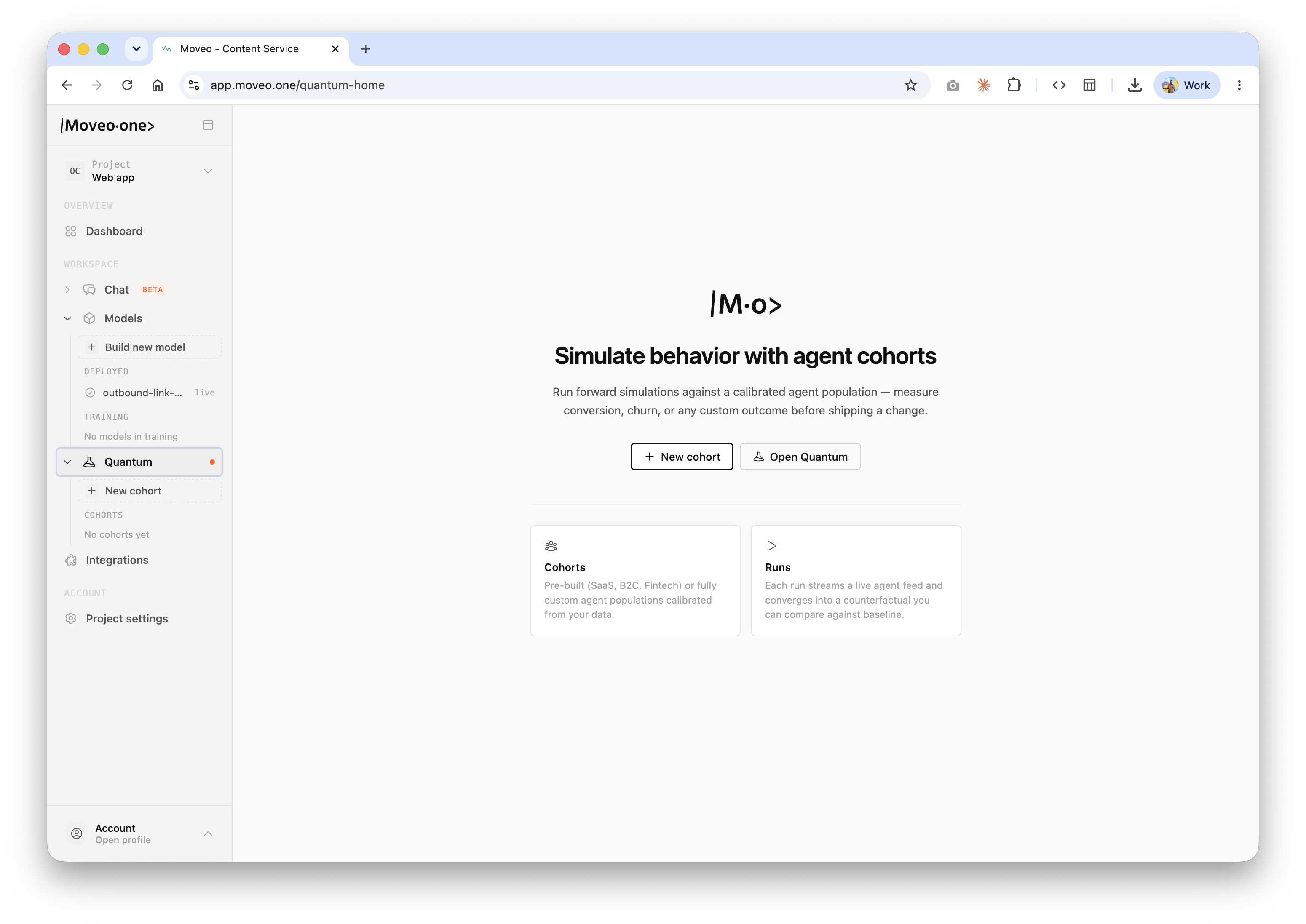
How to Test a Feature Before Launching with Synthetic Users
How to test a feature before launching: Moveo One simulates synthetic users calibrated to your real cohorts against the change, so you see how each segment responds before release.
May 16, 2026
How to Run Targeted A/B Tests That Surface Real Lift
How to run targeted A/B tests: Moveo One scopes each experiment to the users predicted to respond, so lift shows up clearly instead of averaging out across cohorts that never moved.
May 10, 2026